


Meet the Archivist
Behind the scenes at The Royal Yacht Britannia we have a rich collection of history, stories and records. In this blog, we meet Eavey, the Digital Archives Project Coordinator, to discover what it is like to be an Archivist and how we are working to bring the Yacht’s remarkable past to life.
What does a typical day look like for you?
What first inspired you to pursue a career in archives?
I’ve always been a massive history nerd, and one of my favourite periods has always been the French Revolution. What really drew me to it was the way modern archival practices began to take shape during this time. The revolutionaries gathered records from their original locations and moved them to Paris, creating a centralised and organised system of information that still influences how archives work today. This really fascinated me, and my interest continued to grow during my time at university, especially as I engaged with newer writing on archives. During this time, my understanding of the archive changed completely. With ongoing developments in technology, it feels especially important to keep conversations about archives moving forward, particularly as we find new ways to preserve the past. It’s this innovative and evolving side of the archival world that has really inspired me.
How has technology changed the way you catalogue, digitise, or interpret Britannia’s historic materials?
Here at Britannia, we’ve developed our own bespoke software for our online catalogue, which means we work with a truly one-of-a-kind system. This has allowed us to tailor the catalogue closely to the specific needs of our archive. The archival hierarchy is clearly represented, and we’re able to represent the histories of Britannia, Fingal, and the associated Royal sailing yachts, while also ensuring the long-term sustainability of both the catalogue and the Trust. The software is designed to be highly accessible, which means that the public history Britannia represents is easy for people to engage with. It includes keyword searches and advanced filtering options, making it much easier to explore the archives digitally and uncover material that might previously have taken days to locate.
This has also shaped how the archive can be interpreted: we work collaboratively across the organisation, which opens up new ways of thinking about archives as active sites of power and shared community memory. Digitisation has also brought exciting innovations. Materials such as scrapbooks, which were previously difficult to digitise, can now be photographed in high definition and made accessible online. By uploading high-quality images, we’re able to share Britannia’s history with the world, just as she once travelled it.
What are some of the most fascinating items you've come across in the archives?
Some of the most fascinating items in the archive, in my opinion, are the scrapbooks, which were carefully created by former Royal Yachtsmen from across the ranks. They contain an incredible variety of material, including maps, tickets, photographs, and correspondence, and together they form what feels like a miniature archive of an individual’s life and service. These scrapbooks are compelling not only for what they reveal about Royal tours and life aboard Britannia, but also for the insight they offer into how these naval men understood and recorded their own service. They provide a unique and personal perspective of life on Britannia that is difficult to find elsewhere. We currently hold around fifteen scrapbooks in the archive, and each one tells its own distinct and engaging story. 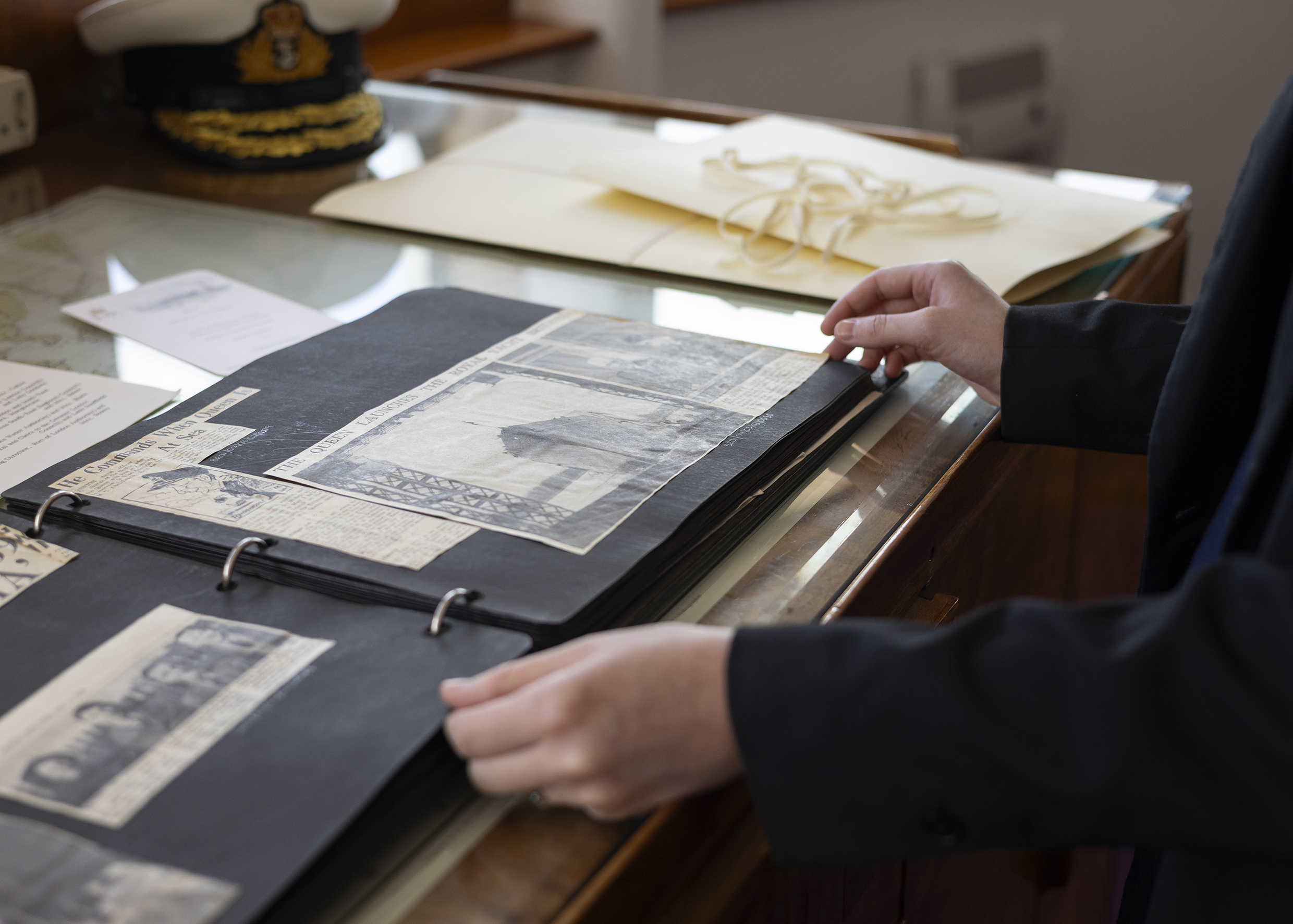
Are there any items you would love to see added to the collection that aren’t currently represented?
I never see the archive as lacking. Absence can be just as telling as presence, and it’s often possible to learn a great deal from what isn’t there. One of the most powerful things about archives is that they tell a story regardless of their size or completeness. Silences can speak just as loudly as documents, and reading against the grain can be a particularly valuable way of understanding the past.
Do you have a favourite item from the archive?
My favourite set of items in the archive is our Daily Orders. These were printed sheets issued to Royal Yachtsmen every day they were in service aboard Britannia, and they offer an incredible insight into everyday life in both the navy and on the Royal Yacht. The orders include a daily schedule, the names of officers on duty, as well as notes from the commander at the end. These comments can range from the announcement of a beard-growing competition to sports results from Britannia’s many teams, to lost and found notices, or congratulations on marriages and the births of Yachtsmen’s children. Together, they offer a vivid window into the social life of the navy, capturing moments that feel informal, personal, and deeply human. 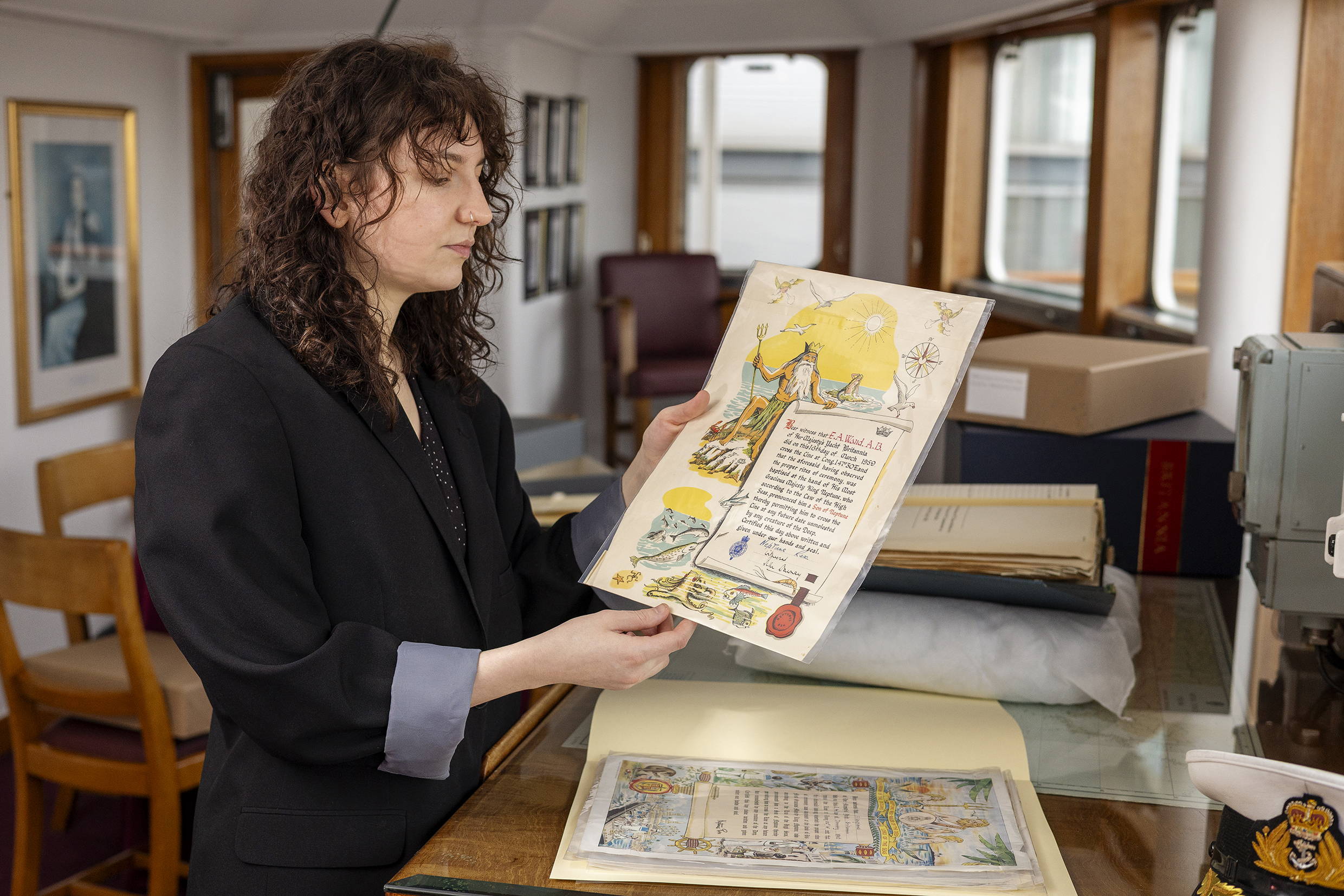
Image & video copyright:
Ruth McQuiggan
Latasha Millette


